sexta-feira, 24 de fevereiro de 2017

Class #2 - Ross's Sandwich

Vocabulary

Image result for sandwich
SANDWICH

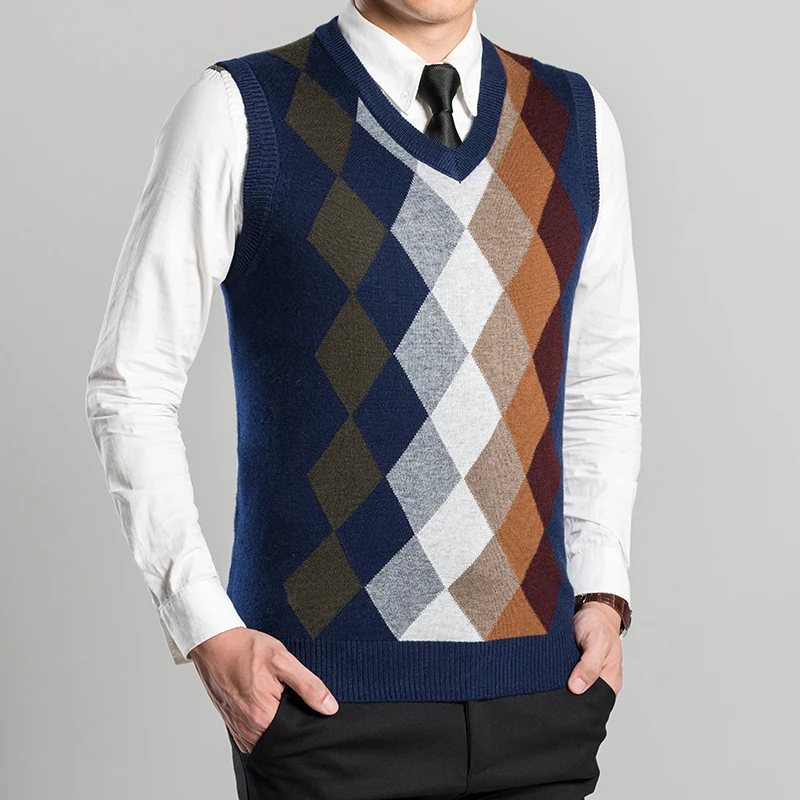
Image result for sweater vest
SWEATER VEST

Image result for NOTE
NOTE

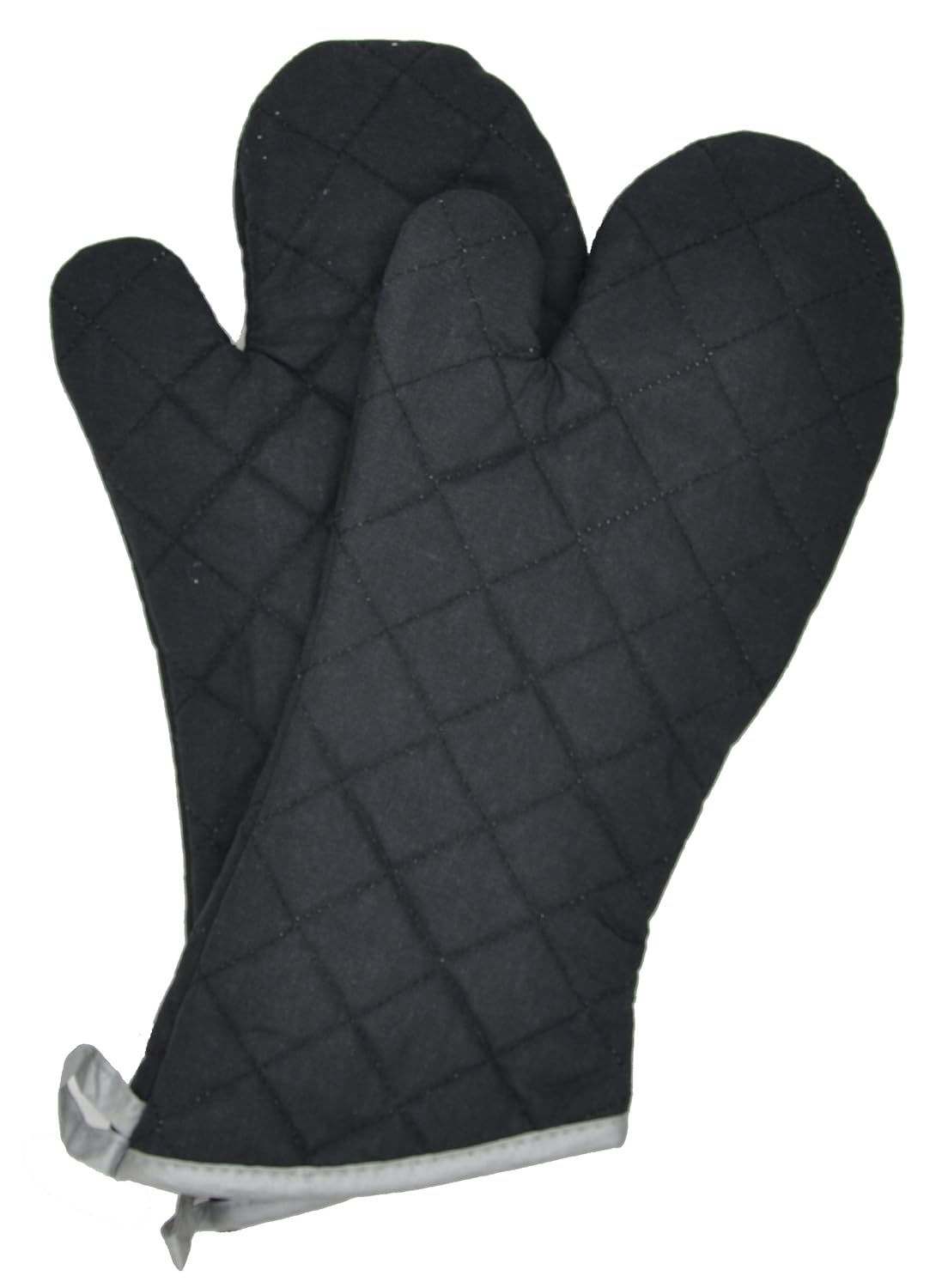
Image result for mitts
OVEN MITTS

Expression "Keep your mitts off my grub": don't touch my food

Image result for cop
POLICE OFFICER / OFFICER/ COP

Related image
THE DOG IS WET


Ross: Hi...
Chandler: Hi. 
Joey: What's wrong, buddy?
Ross: Someone at work ate my sandwich.
Chandler: Oh, what did the police say?
Ross: My thanksgiving leftover sandwich. I can't believe someone just ate it.
Chandler: Ross, it's just a sandwich!
Ross: Just a sandwich? Look, I am 30 years old, ok? I'm going to be divorced twice and I just got evicted. That sandwich was the only good thing going on in my life. Someone ate the only good thing going on in my life!
Chandler: It's a nice sweater vest...
Monica: Ok, look. I have enough stuff for one more sandwich, I mean, I was going to eat it myself, but...
Ross: Mon, that would be incredible, thank you so much. I still can't believe someone ate it!
I mean, look, I left a note and everything.
Chandler: "Knock konck
Who's there?
Ross Gellers' lunch.
Ross Gellers' lunch who?
Ross Gellers' lunch, please don't take me, ok?"
Joey: I'm surprised you didn't go home wearing your lunch.
Phoebe: Okay, look you wanna hold onto your food? You gotta scare people off. I learned that living on the street.
Ross: Really?! So what would you say Pheebs? Stuff like uh, "Keep your mitts off my grub?"
Chandler: Say Ross, when you picture Phoebe living on the street, is she surrounded by the entire cast of Annie?
Phoebe: Okay, this will keep them away from your stuff. (Writes him a note and the gang reads it.)
All: Whoa! Ohh!!
Monica: Phoebe, you are a bad ass!
Phoebe: Someday I'll tell you about the time I stabbed a cop.
Monica: Phoebe?

Phoebe: Well, he stabbed me first!!

Ross: (entering) Phoebe!
Phoebe: Yeah?
Ross: Phoebe! You're note, amazing! Not only did no one touch my sandwich, but people at work are actually afraid of me. Yeah, a guy called me mental! Mental Geller, yeah, I always wanted a cool nickname like that.
Monica: Yeah, the best you got in high school was Wet Pants Geller.
Ross: That was the water fountain! Okay?! Anyway, people are writing reports for me, uh pushing back deadlines to meet my schedule, I'm telling you, you get tough with people you can get anything you want. (Joey walks by with a cup of coffee.) Hey Tribbiani, give me that coffee! Now!

(Joey casually pushes Ross over the back of the couch and sits down proud of himself.)

Dr. Leedbetter: Umm, Ross. May I have a word with you?
Ross: Yeah, of course, Donald.
Dr. Leedbetter: We've been getting reports of some very angry behavior on your part.
Ross: What?!
Dr. Leedbetter: Threatening letters, refusal to meet deadlines, apparently people now call you mental.
Ross: (Proudly) Yeah.
Dr. Leedbetter: We want you to speak to a psychiatrist.
Ross: Oh no, you-you don't understand. Ugh, this is so silly. Umm, this is all just because of a sandwich.
Dr. Leedbetter: (laughs) A sandwich?
Ross: Yeah. You see my-my sister makes these amazing turkey sandwiches. Her secret is, she puts a, an extra slice of gravy soaked bread in the middle; I call it the Moist Maker. Anyway, I-I put my sandwich in the fridge over here…
Dr. Leedbetter: (laughs) Oh, you know what?
Ross: What?
Dr. Leedbetter: I-I'm sorry. I, I-I-I believe I ate that.
Ross: You ate my sandwich?
Dr. Leedbetter: It was a simple mistake. It could happen to anyone.
Ross: (getting upset) Oh-oh really? Did you confuse it with your own turkey sandwich with a Moist Maker?
Dr. Leedbetter: No.
Ross: Do you perhaps seeing a note on top of it?
Dr. Leedbetter: There may have been a-a joke or a limerick of some kind.
Ross: (getting angry) That said it was my sandwich?!
Dr. Leedbetter: Now-now calm down. Come look in my office, some of it my still be in the trash.
Ross: (jumping to his feet in anger) What?
Dr. Leedbetter: Well, it was quite large. I-I-I-I-I had to throw most of it away.
Ross: You-you-you-you (trying to remain in control) threw my sandwich away!
[Cut to an outside shot of the museum.]
Ross: (losing control, we hear him shout outside) MY SANDWICH?!!!
[Cut to a shot of a park.]
Ross: MY SANDWICH!!!!!! (Ross's scream scares a flight of pigeons away.)


GRAMMAR

Would


would for unreal situations

The word would is used for unreal or imagined situations:

'I would love to visit New York.'
'She would like to be professional footballer.'
'We would go, but we are too busy.'

would as a past tense

would and wouldn't are the past tense of will and won't. Let's look at an example of this usingdirect and reported speech:

Andrew: 'I will be late.' (direct speech)
'Andrew said that he would be late.'(reported speech)

Structure of Would


subject + would + main verb
The main verb is always the bare infinitive (infinitive without "to").

subjectauxiliary verbmain verb
+Shewouldliketea.
'd
-Shewould notlikewhisky.
wouldn't
?Wouldshelikecoffee?

Notice that:
  • Would is never conjugated. It is always would or 'd
  • The main verb is always the bare infinitive

would: Polite requests and questions

  • Would you open the door, please? (more polite than: Open the door, please.)
  • Would you go with me? (more polite than: Will you go with me?)
  • Would you know the answer? (more polite than: Do you know the answer?)
  • What would the capital of Nigeria be? (more polite than: What is the capital of Nigeria?)

CURIOSITIES

Thanksgiving

Let's go back in time to the year 1620.
The Pilgrims depart from England on the Mayflower. Their destination: the New World and a new life in America.
They reach America. For the Pilgrims, America is a new and strange land.
It's cold in America in the winter, and they don't have a lot of food. A lot of Pilgrims die.

Now it's the year 1621.
The Pilgrims have new friends: Native American Indians. The Indians teach the Pilgrims to hunt, plant and harvest the crops.
By October-November of 1621, the Pilgrims have plenty of food for the coming winter.
The Pilgrims celebrate the first Thanksgiving. Their special guests are their new friendsm the Native American Indians.

Today, Thanksgiving is a very special holiday in the United States. American families, like the Pilgrims in 1621, get together on Thanksgiving Day to celebrate and to be grateful for all they have.

The centerpiece of contemporary Thanksgiving in the United States and Canada is a large meal, generally centered around a large roasted turkey. The majority of the dishes in the traditional American version of Thanksgiving dinner are made from foods native to the New World, as according to tradition the Pilgrims received these foods from the Native Americans. 


Stuffing: While cooking, stuffing or filling (specifically for poultry) is an edible substance or mixture, often a starch, used to fill a cavity in another food item.

Gravy: Gravy is a sauce, made often from the juices that run naturally from meat or vegetables during cooking


sexta-feira, 2 de dezembro de 2016

Class #1 - The Phantom

Vocabulary

ANTIQUES


CABINET

CRYSTAL


CRYSTAL GLASSES


DESK


FIREPLACE


GHOST / PHANTOM


TOUCHING


SHE'S LEAVING


PEARL NECKLACE


PORTRAIT PAINTING


SHE'S SCARED


SILVER


STUDY

GRAY-HAIRED MAN WEARING GLASSES


The Phantom


OL: This is my husband's study.
WIB: Oh.. What a lot of silver.
OL: Don't worry. You don't have to polish that every day. Once a week is quite sufficient.
WIB: And what about all those glasses in the cabinet?
OL: They are antique crystal, and they are very valuable. You mustn't touch them.
WIB: So... I clean everything except the glasses.
OL: That's right. But you don't need to tidy the desk. My husband gets very upset if anybody touches his papers.
WIB: Very well, madam. Anything else?
OL: Oh, yes. You can't come in here when my husband is not around. Nobody can enter his room without him being here. My husband will be watching your work.
WIB: When can I start?
OL: You can start right now.
WIB: But he's not here now.
OL: Oh, yes he is. Only you can't see him. His spirit is here and he is happy that you will look after his study. He adores his study. And I can see that he likes you.
WIB: Oh, does he? How do you know?
OL: He's a ghost, you see. After a while you'll be able to feel his spirit. Do you believe in ghosts?
WIB: I... Yeah.. Yes, of course.
OL: He died 10 years ago. And he always wants me to take care of his study. He used to spend hours and hours here. When he was alive.
WIB: Oh, wellAnyway, madam. The work seems very interesting. But I'll start tomorrow. Good bye madam. See you tomorrow. Very interesting. Good bye. Say good bye to your husband for me.


Grammar

Future tenses
There are several different ways in English that you can talk about the future. This page is an introduction to the most important ones:

- Predictions/statements of fact
- Intentions
- Arrangements
- Scheduled events

Predictions/statements of fact

The auxiliary verb will is used in making predictions or simple statements of fact about the future.
·         The sun will rise at 6.30 tomorrow.
·         Lunch break today will be 10 minutes longer than usual.
·         In the year 2050 all students will have their own computers in school.
·         If you help me, I will help you.
·         Do you think she will come soon?
·         You won't pass your exams if you don't start working harder.
·         I know my parents won't let me go to the party.
·         Will it snow for Christmas?
·         I know she's sick, but will she be back in school tomorrow?

Intentions
The auxiliary verb going to is used in talking about intentions. (An intention is a plan for the future that you have already thought about.)
·         We're going to buy a new car next month.
·         I'm going to work in a bank when I leave school.
·         In the new year I'm going to stop eating so much junk.
·         He's not going to go to the dance. He's got too much work.
·         I'm not going to watch TV until my science project is finished.
·         Are you going to play basketball after school?
·         What are you going to have for lunch today?

Note: going to is often used in the past tense to talk about an unfulfilled intention. 
Examples: I was going to study for my grammar test, but I had no time. / He was going to call you, but he couldn't find his mobile phone. / My grandmother was going to visit us, but she fell and broke her arm.

Arrangements
The present continuous tense is used in talking about arrangements. (An arrangement is is a plan for the future that you have already thought aboutand discussed with someone else.)

·         I'm meeting my mother at the airport tomorrow.
·         Our grandparents are visiting us this Christmas.
·         Sorry, I can't stay after school today; I'm playing tennis with Jun-Sik.
·         My sister's going to the dentist tomorrow.
·         I'm not returning home for the holidays, so I can come to your party after all!
·         Are you doing anything on Sunday morning?
·         Do you know if he is going to the dance with Maiko next week?

Scheduled events
The present simple tense is usually used to refer to future events that are scheduled (and outside of our control).
·         Hurry up! The train departs in 10 minutes.
·         leave Frankfurt at 5 o'clock in the morning and arrive in New York
at midnight the next day.
·         She has an appointment with the headmaster after school today.
·         There's no need to hurry. The train doesn't leave for another 30 minutes.
·         When does the meeting begin?

Object Pronouns

The seven basic pronouns have one form when they are used as subjects and another form when they are used as objects.

Subjects are what the sentence is about.
Objects are what is affected by the action of the subject.
  • I like whisky. (I is the subject).
  • I read books. (Books is the object as it is receiving the action).
PRONOUNS
Subject Pronoun
Object Pronoun
I
Me
You
You
He
Him
She
Her
It
It
We
Us
You (plural)
You
They
Them

Object pronouns are used instead of nouns, usually because we already know what the object is. It makes the sentence easier to read and understand and avoids repetition. We normally use object pronouns after a verb or a preposition.

Examples
I like horses.
Subject Pronoun
Horses don't like me.
Object Pronoun
We talk to our neighbour.
Subject Pronoun
She talks to us.
Object Pronoun
They listen to the teacher.
Subject Pronoun
Listen to me carefully.
Object Pronoun
You speak very quickly.
Subject Pronoun
We watch them on TV.
Object Pronoun

The Object Pronoun - it
Be careful when using 'it' as an object pronoun because it is only in the correct context that it has meaning. It needs to have already been mentioned or obvious to the listener what you are referring to. Compare;
  • You are sitting on it! (The listener probably doesn't know what the speaker refers to).
  • The letter is on the sofa. You are sitting on it! (It is obvious in the second sentence that the reference is to the letter)
Indefinite Pronouns
The indefinite pronouns are:

somebody
someone
something
anybody
anyone
Anything
nobody
no one
Nothing
everybody
everyone
Everything

We use indefinite pronouns to refer to people or things without saying exactly who or what they are. We use pronouns ending in -body or -one for people, and pronouns ending in -thing for things:

Everybody enjoyed the concert.
I opened the door but there was no one at home.
It was a very clear day. We could see everything.
We use a singular verb after an indefinite pronoun:

Everybody loves Sally.
Everything was ready for the party.
When we refer back to an indefinite pronoun we normally use a plural pronoun:

Everybody enjoyed the concert. They stood up and clapped.
I will tell somebody that dinner is ready. They have been waiting a long time.
We can add -'s to an indefinite pronoun to make a possessive.

They were staying in somebody’s house.
Is this anybody’s coat?
We use indefinite pronouns with no- as the subject in negative clauses (not pronouns with any.)
Anybody didn’t come >> Nobody came.
We do not use another negative in a clause with nobodyno one or nothing:

Nobody came.
Nothing happened.
We use else after indefinite pronouns to refer to people or things in addition to the ones we already mentioned.

All the family came, but no one else.
If Michael can’t come we’ll ask somebody else.
So that's eggs, peas and chips. Do you want anything else?

Can
Can is an auxiliary verb, a modal auxiliary verb. We use can to:
  • talk about possibility and ability
  • make requests
  • ask for or give permission
Structure of Can
subject + can + main verb
The main verb is always the bare infinitive (infinitive without "to").
subject
auxiliary verb
main verb
+
I
can
play
tennis.
-
He
cannot
play
tennis.
can't
?
Can
you
play
tennis?
Notice that:
  • Can is invariable. There is only one form of can.
  • The main verb is always the bare infinitive.
The main verb is always the bare infinitive (infinitive without "to").

Use of Can

Can: Possibility and Ability
We use can to talk about what is possible, what we are able or free to do:
  • She can drive a car.
  • John can speak Spanish.
  • cannot hear you. (I can't hear you.)
  • Can you hear me?
Normally, we use can for the present. But it is possible to use can when we make present decisions about future ability.
A.   Can you help me with my homework? (present)
B.    Sorry. I'm busy today. But I can help you tomorrow. (future)

Can: Requests and Orders
We often use can in a question to ask somebody to do something. This is not a real question - we do not really want to know if the person is able to do something, we want them to do it! The use of can in this way is informal (mainly between friends and family):
  • Can you make a cup of coffee, please.
  • Can you put the TV on.
  • Can you come here a minute.
  • Can you be quiet!
Can: Permission
We sometimes use can to ask or give permission for something:
A.  Can I smoke in this room?
B.  You can't smoke here, but you can smoke in the garden.

(Note that we also use could, may, might for permission. The use of can for permission is informal.)

Must


  • Must is a modal verb.
  • Must can be replaced by Have to with little difference in meaning:
  • Have to is a more informal while Must is mostly used in written orders or instructions.
  • Mustn't = it is prohibited; it is not allowed.

Image result